ArtPrize and Urinals: AI Art vs. Dada
Bethany Roesler • September 17, 2026 • 3 min read
Reflecting on the fact that AI art is allowed in ArtPrize, my city’s internationally recognized art competition, I’m about to wax poetic about one of my favorite bizarre moments in art history: the Dada movement.
It’s ArtPrize season in Grand Rapids. 🍂 AI art is allowed in the competition. It’s causing a stir.
So let’s talk about one of my favorite art history topics: the Dada movement.
Picture me in college: pulling all-nighters to develop film. Also developing carpal tunnel over a giant charcoal portrait I spent weeks drawing. Only to open my textbook to find that in 1917, Marcel Duchamp signed a urinal, entered it into an exhibition, and now it is enshrined in art history books forever. He was an icon. And I was miffed.
It was 1917’s ragebait. Absurd! Provocative! And that was the point. Duchamp’s “Fountain” posited that art is “art” because an artist says so. That editorial choice and conceptual ideas qualify.
I preferred The Sistine Chapel, Impressionist paintings, statues of Greek goddesses. I defined “art” by what I found aesthetically pleasing, technically impressive or requiring talent. Or at least… effort. Some carpal tunnel.
Dada introduced me to art intended not to impress, but to provoke. To make you feel, think, and react, even if that reaction is to clutch your pearls. Like the banana Maurizio Cattelan taped to a wall in 2019, which sold for $6.2 million smackaroos. 🍌 Or the pair of blank canvases Jens Haaning titled "Take the Money and Run" in 2021, which hung in a museum while he kept the $84,000 they had loaned him, expecting something else. ⬜️⬜️ (Yes, a legal battle ensued.)
I don’t “like” Dada art, but I respect it because it stood for something. It was defiant, rejecting the rules and traditions of high art and the society that gave us World War I. Kinda punk rock.🤘🏻
So why write an essay about Dada when I think of AI in art? Because it prompts similar existential questions about what art even is.
My feelings are mixed. Personally, I would not submit an AI-generated or assisted piece in a competition against artists who used only their human creativity and skill. I don’t think that’s very punk rock. I wish it were ONLY allowed in the “New Media” category, or its own category, if at all.
Dada art came from human brains, but many said they cheated — Duchamp didn’t craft the urinal, or any of his “readymades.” The exhibition rejected him. Yet the audacity was, itself, performance art. A replica later sold for $1.7 million, and an uncovered 1917 letter revealed the original may have actually been created by… a woman. (Gasp!) An unnamed friend of his. Her photo wasn’t in my textbook.
I appreciate the conversations AI elicits in the art world. What do we respect or reject and why? Is this black & white, or is there grey? Who deserves credit? What’s slop and what’s editorial judgment? What are our values and boundaries? What to make of a platform trained on stolen art that generates amalgamations of it? How do we protect our communities from the disruptions of data centers and layoffs? From unethical AI-generated material? Where do we draw the lines?
(Preferably not in charcoal. I’m still recovering.)
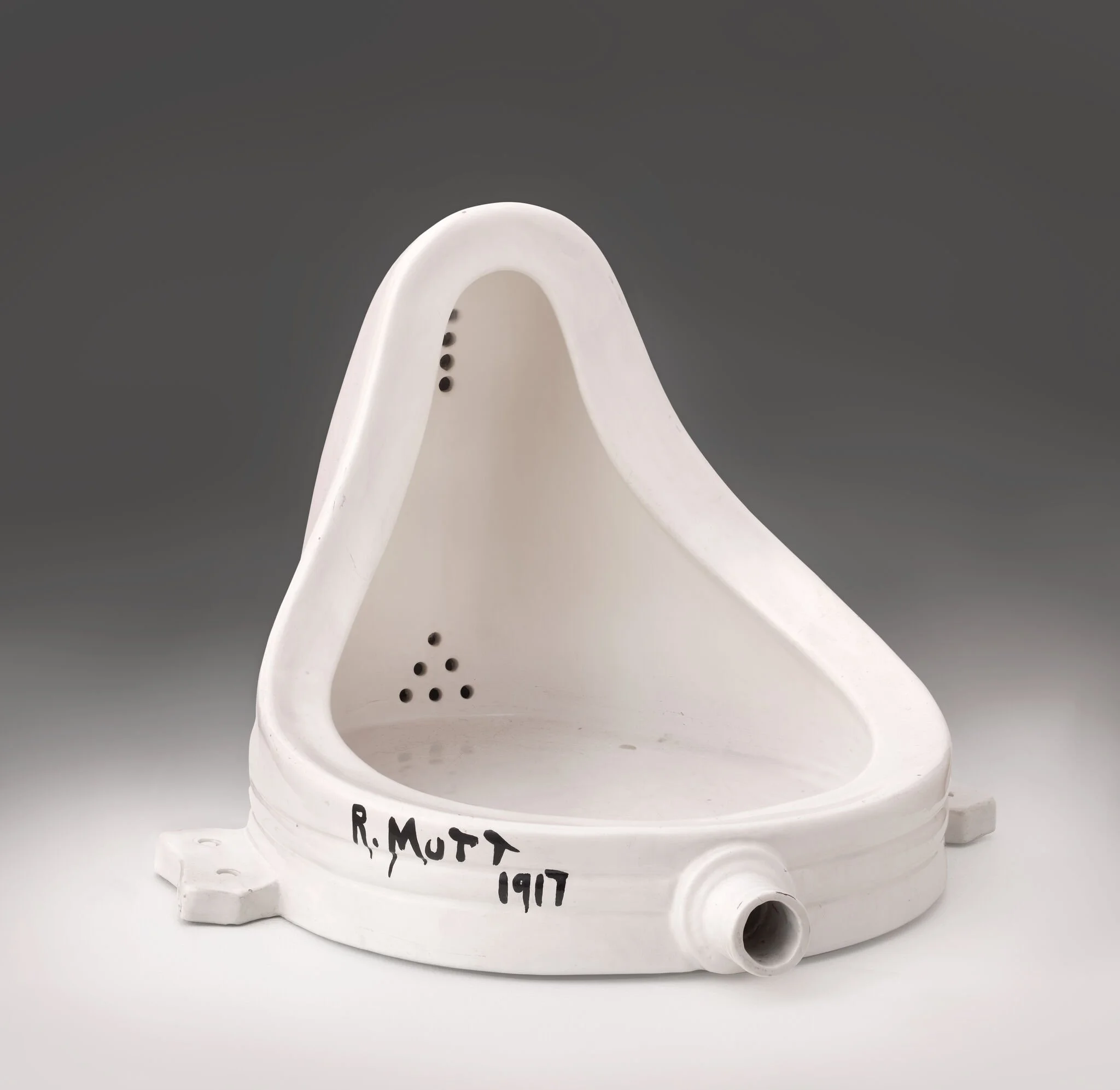
Image: SFMOMA. An authorized replica of Marcel Duchamp’s “Fountain”.